-
tel:
+86 13357917888 -
email:
sales@cxrollformer.com

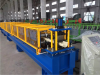
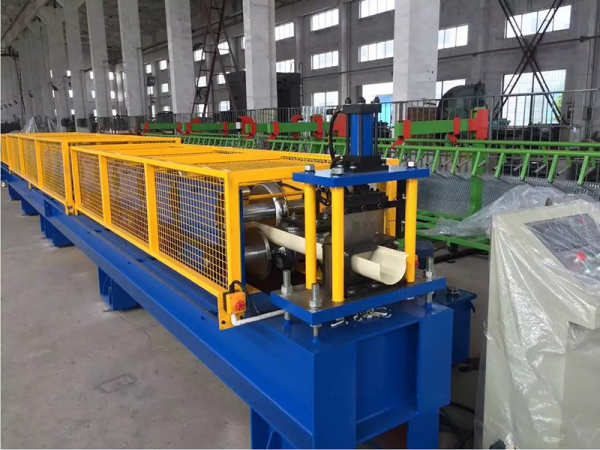
Molded Tank Forming Equipment
Equipment for forming tank shells and panels to drawing, where the forming method follows the section: continuous cold roll forming for long shell profiles, press forming for dished or flanged panels. Built by Jiangsu Chuangxu in Changzhou, China.


What this equipment does
A tank body is rarely one uniform section. Long shells suit continuous roll forming, while dished ends, flanged openings and stiffened panels need press forming. This equipment is configured around that mix: the sections that run continuously are roll formed, and the parts that need a die are pressed, so a tank producer gets a matched set rather than a single machine doing everything badly.
Machine configuration
| Forming method | Cold roll forming for continuous shell profiles; press forming for dished, flanged or stiffened parts |
|---|---|
| Raw material | Galvanized steel, cold rolled steel, stainless steel sheet and strip |
| Sections produced | Shell panels and profiles formed to the tank drawing |
| Tooling | Rolls or press dies designed from the tank drawing, agreed before manufacture |
| Cutting | Cut-to-length for shell sections; blank shearing for pressed panels |
| Control system | PLC with touch screen for length and batch settings |
| Power supply | Three-phase, voltage and frequency matched to destination country |
| Scope note | Final configuration depends on the tank type, plate grade and joint design |
Typical applications
- Storage and process tanks — shells and panels for industrial vessels
- Water and liquid containers — formed panels with sealed joints
- Transport tanks — profiled shells for road tankers
- Sheet metal workshops — replacing press-brake sequences on repeated parts
How to specify your equipment
- Start from the tank drawing and its joints. Whether a shell is rolled or pressed follows from the joint design, not from machine preference.
- State the plate grade and thickness. Stainless and carbon steel need different tooling and different handling throughout.
- Separate continuous from one-off parts. Roll forming pays on repeated sections; pressing pays on shaped parts.
- Plan the welding downstream. Forming accuracy shows up as fit-up difficulty at welding, so tolerances are agreed with that in mind.
Delivery and service
- Minimum order — 1 set, configured to the tank drawing.
- Payment — L/C or T/T.
- Incoterms — CFR, FOB, CIF, EXW.
- Shipping — ocean freight from Shanghai port.
- Overseas support — service outlets and showrooms in Canada, Egypt, Turkey, the United Kingdom, the United States, Italy, France, Brazil, Peru and Saudi Arabia; out-of-warranty support online.
Frequently asked questions
How is this equipment priced?
Price depends on how many sections are roll formed versus pressed, plate grade and thickness, and tooling complexity. Send the tank drawing for a configured quotation.
Is it a roll forming line or a press?
Usually both, because a tank mixes continuous shell sections with shaped parts; the split is decided from your drawing.
Can it form stainless steel?
Yes, with tooling and surface protection suited to stainless; the grade must be stated at specification.
What is the minimum order quantity?
One configured set.
What is the lead time?
Confirmed once the drawing, plate grade and section split are fixed.
What terms apply?
L/C or T/T, CFR, FOB, CIF or EXW, ocean freight from Shanghai, out-of-warranty support online.
Related Products




Contact US
Product Information
Quantity
Unit
Piece
Support order samples, customization, wholesale direct, and complete payment. If the product you look for does not have corresponding customized content, pls fill out the form below to contact us, and we will reply ASAP.