-
tel:
+86 13357917888 -
email:
sales@cxrollformer.com


Wind-resistant Door Integrated Machine Equipment
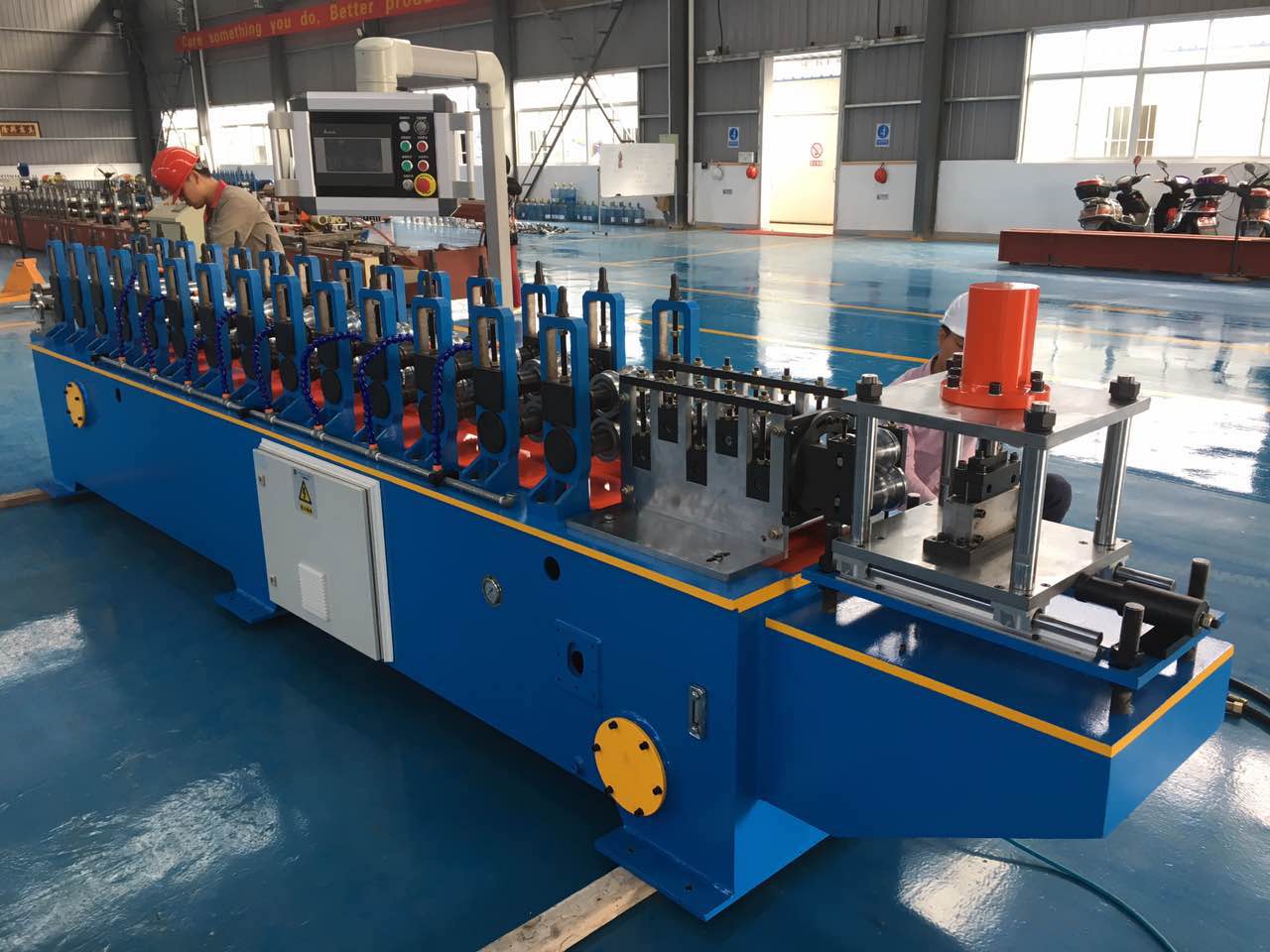
An integrated wind-resistant door machine combines slat forming, reinforcement and assembly stations in one layout, so a complete door leaves the plant rather than a coil of profiles. Built by Jiangsu Chuangxu, Changzhou, China for door manufacturers selling complete wind-rated doors.


What this machine does
Most door producers buy a forming line and then assemble doors on benches, moving profiles between stations by hand. An integrated machine puts forming, reinforcement and assembly in one flow, so the output is a finished door rather than a stack of slats. For wind-rated doors that matters, because the rating depends on how the slats, guides, axle and fixings come together — not on any one component.
Machine configuration
| Function | Integrated slat forming, reinforcement and door assembly in one layout |
|---|---|
| Raw material | Galvanized steel strip, prepainted strip, aluminium strip |
| Slat section | Reinforced profile formed to your wind load requirement |
| Stations | Forming, cutting, reinforcement fitting and assembly, laid out as one flow |
| Wind rating | Slat section, guide and fixing pattern designed to the door width rating |
| Control system | PLC with touch screen for slat length and batch count |
| Power supply | Three-phase, voltage and frequency matched to destination country |
| Layout note | Footprint and operator positions agreed at specification, since integration changes the plant layout |
Typical applications
- Wind-rated shutter production — complete doors assembled in one flow
- Exposed and coastal projects — doors specified to a wind pressure
- Door manufacturers — replacing bench assembly between separate stations
- Project supply — doors built to a schedule rather than to stock
How to specify your machine
- Start from the wind rating and door size. Those decide slat section and guide strength, which decide the stations.
- Decide how much assembly moves in house. Every station brought into the flow reduces handling but adds footprint.
- Confirm the hardware. Axle, springs, lock and guides are part of the assembly, so their supply is part of the specification.
- Plan the plant layout early. An integrated machine changes material flow, and retrofitting the layout later costs more than designing it once.
Delivery and service
- Minimum order — 1 set, configured to your door range.
- Payment — L/C or T/T.
- Incoterms — CFR, FOB, CIF, EXW.
- Shipping — ocean freight from Shanghai port.
- Overseas support — service outlets and showrooms in Canada, Egypt, Turkey, the United Kingdom, the United States, Italy, France, Brazil, Peru and Saudi Arabia; out-of-warranty support online.
Frequently asked questions
How much does an integrated door machine cost?
Price depends on how many stations are integrated, slat section, door size range and the assembly scope. Send the door drawing and wind requirement for a configured quotation.
What is the advantage over separate machines?
No handling between benches, and a consistent door because forming and assembly are matched; the trade is footprint and a less flexible layout.
Does the machine guarantee the wind rating?
The rating belongs to the tested door assembly; the machine's job is to reproduce that assembly consistently, component by component.
What is the minimum order quantity?
One configured line.
What is the lead time?
Confirmed once door range, slat section and integration scope are fixed.
What terms apply?
L/C or T/T, CFR, FOB, CIF or EXW, ocean freight from Shanghai, out-of-warranty support online.
Related Products



Contact US
Product Information
Quantity
Unit
Piece
Support order samples, customization, wholesale direct, and complete payment. If the product you look for does not have corresponding customized content, pls fill out the form below to contact us, and we will reply ASAP.