-
tel:
+86 13357917888 -
email:
sales@cxrollformer.com

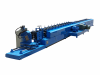
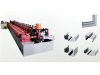

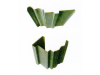
Door Frame Forming Equipment
A door frame roll forming line produces steel door frame profiles from galvanized strip, punches the hinge and lock holes and cuts each jamb to length. Chuangxu builds these lines in Changzhou, China for steel door manufacturers and construction material suppliers.
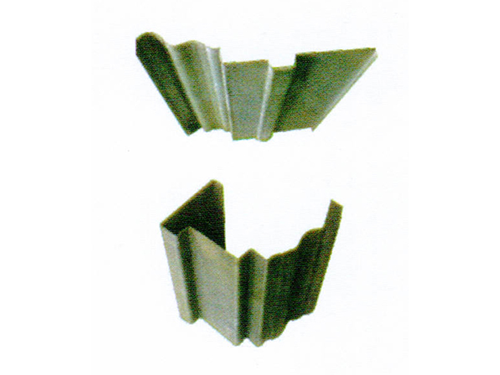
What this machine does
A door frame line turns flat steel strip into the jamb and header profiles that a steel door set is built around, punches the hinge and lock preparation in the same pass and cuts each piece to length. The frame leaves the line formed, punched and measured, so the door assembly stage becomes fitting rather than fabrication.
Machine configuration
| Function | Cold forming of steel door frame profiles with inline punching and cut-to-length |
|---|---|
| Raw material | Galvanized steel strip, cold rolled strip, prepainted strip |
| Frame profiles | Jamb and header sections formed to your door frame drawing, including wrap-around and open-back types |
| Punching | Hinge, lock and fixing holes punched inline with a die set matched to your hardware |
| Cutting | Servo cut-to-length; mitre or corner preparation handled by a separate station if required |
| Control system | PLC with touch screen for length, quantity and hole pattern |
| Power supply | Three-phase, voltage and frequency matched to destination country |
| Roll design | Designed in-house with German COPRA roll forming software |
Typical applications
- Steel door manufacturers — frame sets produced alongside the door leaf line
- Fire and security door assembly — frames with hardware preparation already punched
- Construction material traders — standard frame lengths held in stock
- Prefabricated building suppliers — frames matched to modular wall openings
How to specify your line
- Send the frame drawing. The jamb section, return depth and corner detail determine the roll set more than the strip thickness does.
- Agree the hardware set. Hinge positions and lock cases differ by market, and the punching dies follow from them.
- Decide how corners are made. Mitred, welded or mechanically joined corners need different downstream steps, so settle this before the line is configured.
- Match strip width to the developed section. A frame profile that needs a wider strip than the line accepts cannot be corrected later by adjusting rolls.
Delivery and service
- Minimum order — 1 set, built to drawing.
- Payment — L/C or T/T.
- Incoterms — CFR, FOB, CIF, EXW.
- Shipping — ocean freight from Shanghai port.
- Overseas support — service outlets and showrooms in Canada, Egypt, Turkey, the United Kingdom, the United States, Italy, France, Brazil, Peru and Saudi Arabia; out-of-warranty support online.
Frequently asked questions
What drives the price of a door frame forming line?
Frame profile complexity, strip thickness, number of stations, the punching die set for your hardware and whether corner preparation is included. Send the frame drawing for a configured quotation.
Can the line punch hinge and lock holes?
Yes, with dies matched to the hardware you use; the hole pattern is entered on the control panel per frame length.
Does it produce finished frames with corners?
The line delivers formed, punched and cut frame members. Corner joining, whether welded, mitred or mechanical, is a separate operation unless a corner station is specified.
What is the minimum order quantity?
One set, built to your frame drawing.
What is the lead time?
Confirmed once the profile, hardware set and corner method are fixed, because station count depends on them.
What terms do you offer?
L/C or T/T, with CFR, FOB, CIF or EXW, shipped by sea from Shanghai, and out-of-warranty support handled online.
Related Products




Contact US
Product Information
Quantity
Unit
Piece
Support order samples, customization, wholesale direct, and complete payment. If the product you look for does not have corresponding customized content, pls fill out the form below to contact us, and we will reply ASAP.