-
tel:
+86 13357917888 -
email:
sales@cxrollformer.com

Fire Door Supporting Combination Punching Machine
A combination punching machine punches every hole and notch a fire door frame or leaf needs in a single stroke, instead of one press per hole. Chuangxu builds these machines in Changzhou, China around the hardware schedule of the door being produced.


What this machine does
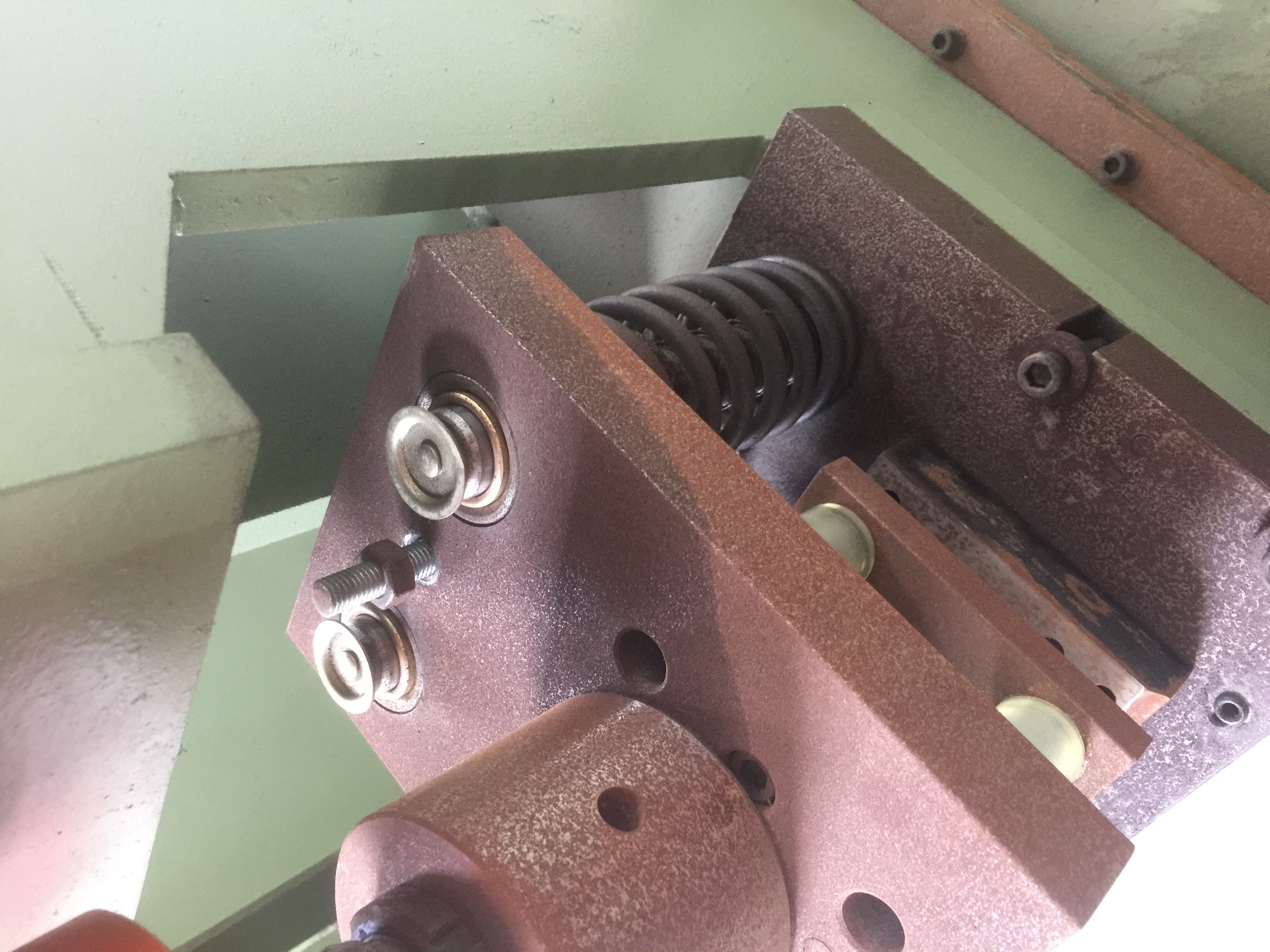
A combination punching machine carries a die set that punches hinge, lock, closer and fixing positions in one stroke. On a fire door the hardware positions are fixed by the tested assembly, so the value here is not speed alone: it is that every leaf or frame leaves the machine with identical preparation, which is what keeps a batch inside the certified configuration.
Machine configuration
| Function | Multi position punching and notching for door frames and leaves in one stroke |
|---|---|
| Die set | Combination die built to your hardware schedule and door drawing |
| Positions | Hinge, lock, closer and fixing holes plus notches, punched simultaneously |
| Material | Galvanized steel, cold rolled steel, prepainted steel sheet |
| Thickness range | Agreed at specification; the press tonnage follows from it |
| Control system | PLC control with stroke and batch settings |
| Power supply | Three-phase, voltage and frequency matched to destination country |
| Changeover | Die change for a different door type, with alignment references built in |
Typical applications
- Fire door frames — hinge and lock preparation at production speed
- Fire rated leaves — hardware and closer positions in one operation
- Security doors — multi point hardware preparation
- Existing plants — replacing a sequence of single hole presses
How to specify your machine
- Send the hardware schedule and door drawing. The die set is built from these two documents, and every position on the door must appear on one of them.
- State the thickness range. Press tonnage and die clearance follow from the thickest sheet you will punch.
- Think about changeover. If the plant runs several door types, die change time is a real part of the business case.
- Confirm the datum. All positions are measured from a reference edge, so the machine needs a repeatable stop rather than operator judgement.
Delivery and service
- Minimum order — 1 set, with die to your hardware schedule.
- Payment — L/C or T/T.
- Incoterms — CFR, FOB, CIF, EXW.
- Shipping — ocean freight from Shanghai port.
- Overseas support — service outlets and showrooms in Canada, Egypt, Turkey, the United Kingdom, the United States, Italy, France, Brazil, Peru and Saudi Arabia; out-of-warranty support online.
Frequently asked questions
How much does a combination punching machine cost?
Price depends on the number of punch positions, die complexity, tonnage and changeover arrangement. Send the door drawing and hardware schedule for a quotation.
Why combination punching rather than single hole presses?
Because every part comes out with identical preparation; on a fire door that consistency is part of staying inside the certified assembly.
How long does a die change take?
Changeover arrangement is agreed at specification and depends on how many door types you run, so it is quoted with the machine rather than assumed.
What is the minimum order quantity?
One machine including the die.
What is the lead time?
Confirmed after die design approval, since the die dominates the schedule.
What terms apply?
L/C or T/T, CFR, FOB, CIF or EXW, ocean freight from Shanghai, out-of-warranty support online.
Related Products




Contact US
Product Information
Quantity
Unit
Piece
Support order samples, customization, wholesale direct, and complete payment. If the product you look for does not have corresponding customized content, pls fill out the form below to contact us, and we will reply ASAP.