-
tel:
+86 13357917888 -
email:
sales@cxrollformer.com

Embossed Products Showcase
A showcase of embossed metal panels produced on our lines: woodgrain, stucco, leather and geometric textures formed in coated steel and aluminium sheet, with the pattern fixed in an engraved roll.
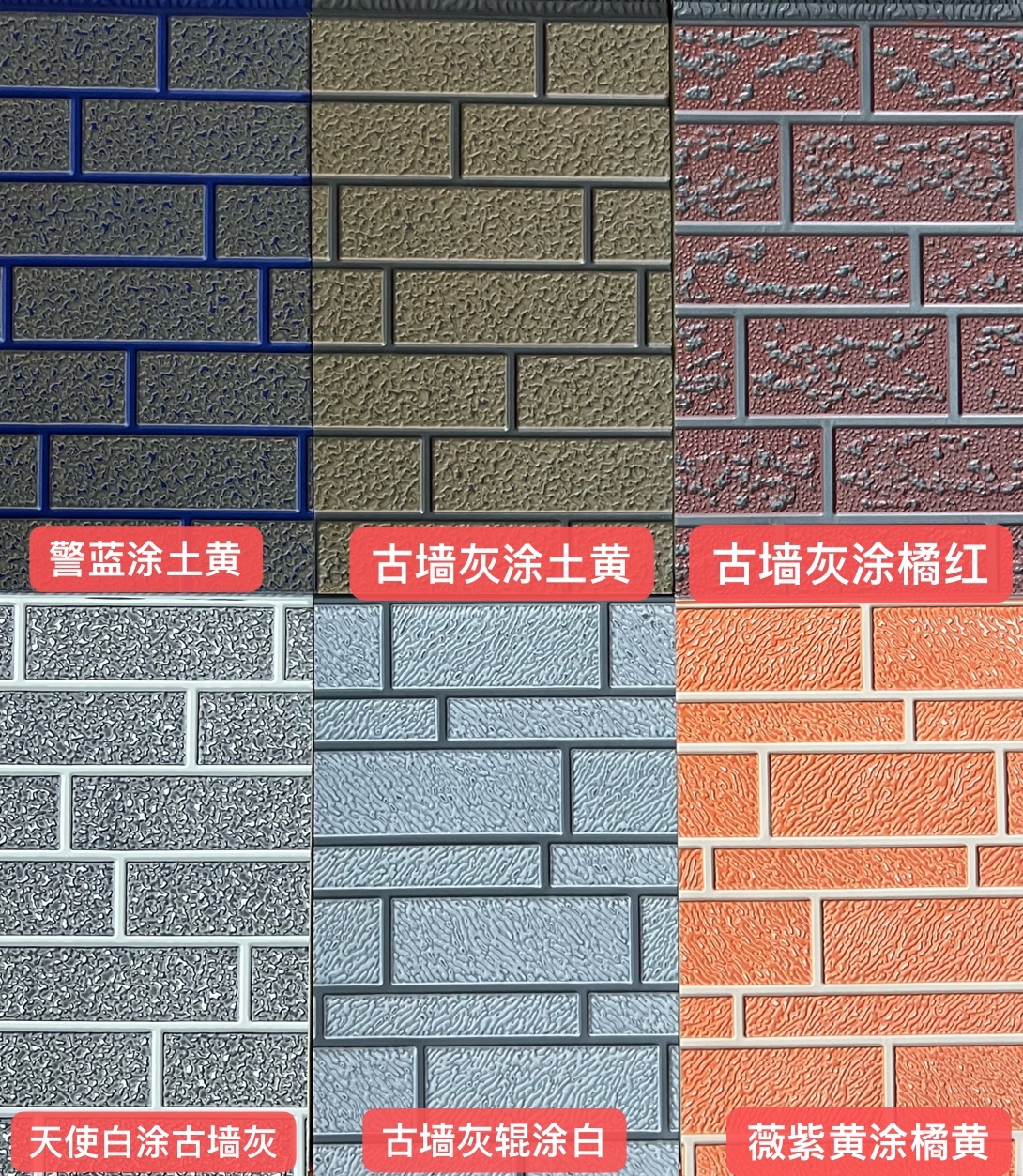


What this page shows
These are finished panels, not machines: each image is a texture produced on our embossing lines, photographed on the sheet itself. The purpose of the page is to answer a practical question before a line is bought — what a pattern will actually look like on coated steel or aluminium, and what it costs in tooling to get there.
Pattern families
| Woodgrain | Timber textures for door skins, cladding and appliance panels; the most requested family because it replaces real timber at a fraction of the maintenance. |
|---|---|
| Stucco and plaster | Fine random texture that hides handling marks; common on industrial door panels and utility cladding. |
| Leather and grain | Upholstery style textures for interior panels, lift cars and furniture. |
| Geometric and linear | Regular patterns for architectural cladding and ceiling panels where a repeat is visible. |
| Bespoke | Customer artwork or a physical sample, engraved as a dedicated roll. |
Materials and finishes
- Prepainted steel — the usual base for exterior and interior panels; the coating system sets the warranty, the embossing sets the look.
- Galvanized steel — textured and then coated downstream where corrosion resistance is the priority.
- Aluminium — lighter sheet for interior and transport applications, formed at lower pressure.
- Film laminated — embossed and film bonded in one pass where scratch protection is required.
From pattern to production
- Standalone embossing — metal embossing machine with forged rolls hardened to HRC60, laser engraved and chrome plated.
- Embossing inside a panel line — continuous door panel line where the texture is applied before the panel is cut to width.
- Embossing with film — belt laminating press for pattern and protective film in one pass.
How to choose a pattern
- Start from the viewing distance. A texture read from two metres needs less depth than one seen at arm's length.
- Match depth to sheet thickness. Deep relief needs gauge to support it, and thin sheet will distort before the pattern is complete.
- Check the coating. High gloss finishes show every tooling mark; matt and textured coatings are more forgiving.
- Request a sample on your own coil. A pattern behaves differently on every coating system, and a sample removes the guesswork.
Frequently asked questions
Are these panels for sale, or is this a machine page?
This page shows what our embossing lines produce. The machines themselves are listed in the embossing section, and the panels here are samples of their output.
Can you produce a custom pattern?
Yes. A pattern is engraved into a dedicated roll from your artwork or a physical sample, so any design that can be engraved can be produced.
What materials can be embossed?
Prepainted steel, galvanized steel and aluminium sheet; the practical limit is sheet thickness against pattern depth.
Does embossing affect the coating warranty?
The coating warranty is issued by the coil supplier and depends on the coating system; embossing changes the surface, so the two are confirmed together before a specification is fixed.
How deep can the texture go?
Depth is limited by sheet thickness and pattern detail, and is agreed with the tooling design rather than quoted as a single figure.
How do we get samples?
Send the artwork or a reference sample together with the sheet you intend to use, and the pattern is evaluated against that combination.
Related Products




Contact US
Product Information
Quantity
Unit
Piece
Support order samples, customization, wholesale direct, and complete payment. If the product you look for does not have corresponding customized content, pls fill out the form below to contact us, and we will reply ASAP.