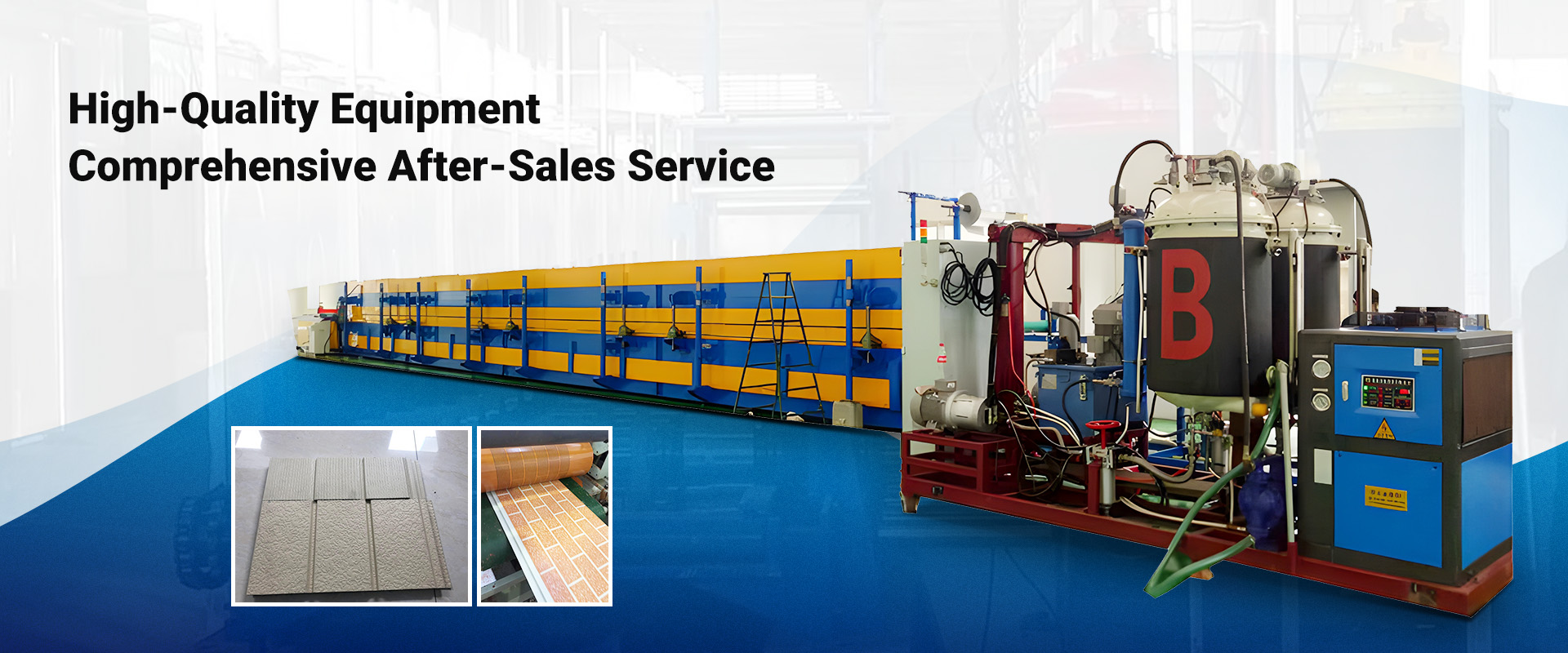
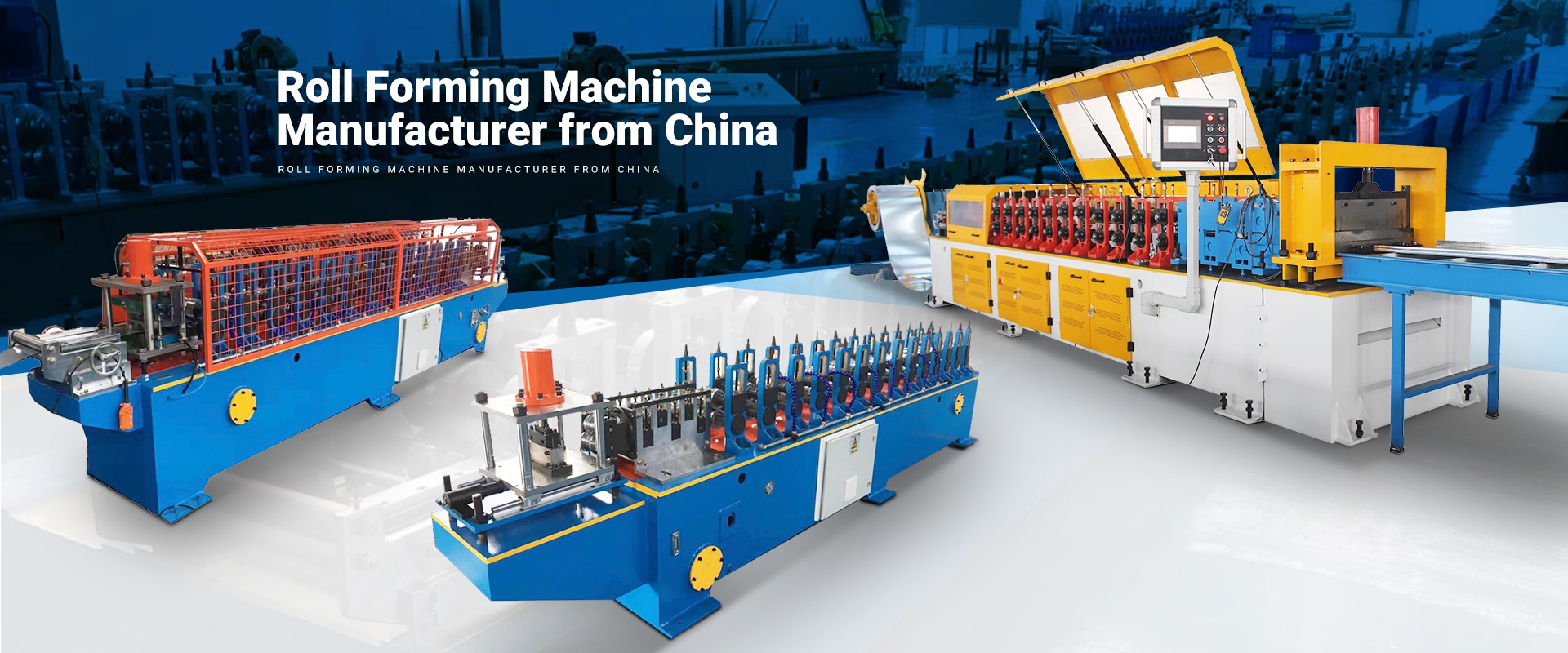
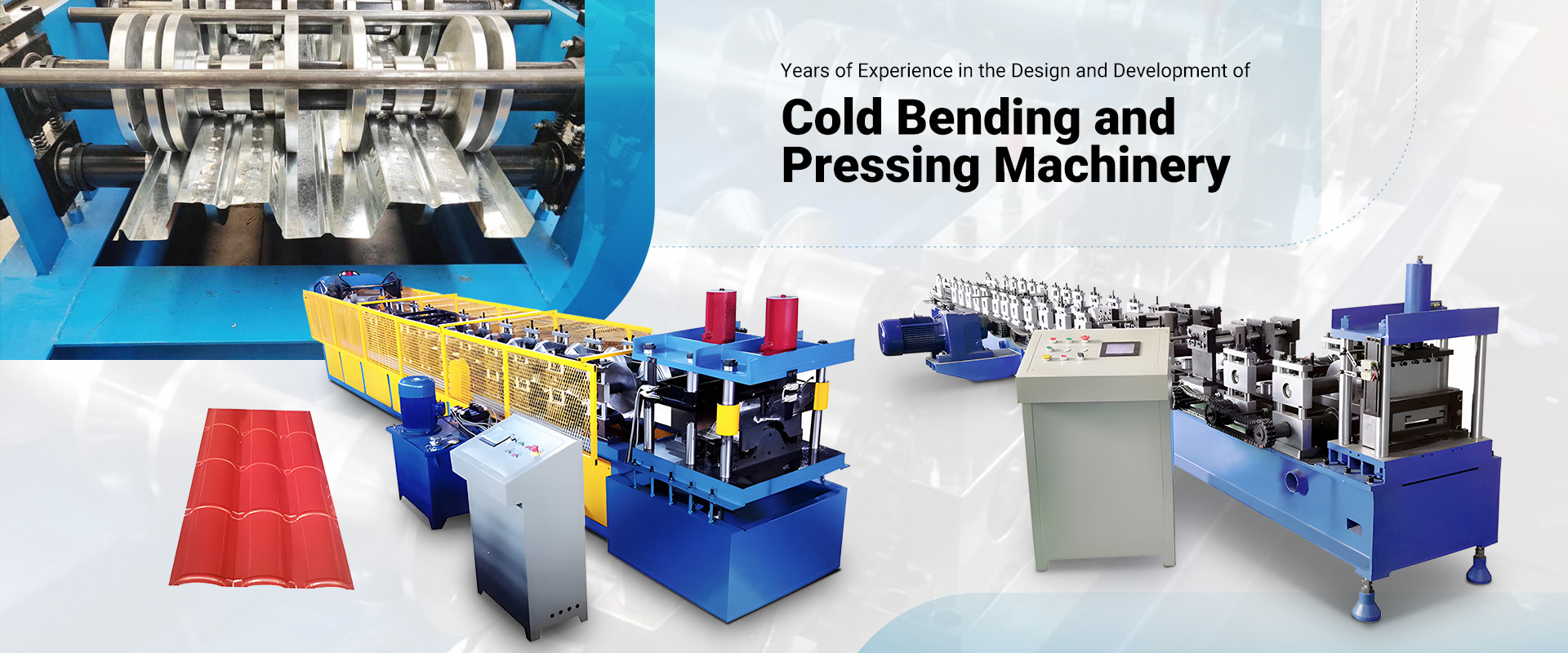
Three cold roll forming machines built by Chuangxu
Foaming and roll forming line for insulated panels, with finished panels inset
Cold roll forming and pressing machines with a red metal roofing tile sample
Chuangxu factory entrance in Changzhou, China

About Us

Jiangsu Chuangxu Roll Forming Machinery Co., Ltd was established in 2010, located in the picturesque Xueyan Town, Wujin District, Changzhou City, in the Yangtze River Delta. It is a technical-intensive factory specializing in the design and manufacture of various cold-formed shaping equipment, including metal exterior wall insulation board equipment, integrated wall panel equipment, door frame forming machines, polyurethane foam equipment, and cold bending forming machines. The company has professional cold-formed steel roll design software - German COPRA software, as well as a team with many years of experience in cold-formed shaping machinery design development and rich manufacturing and installation experience, along with high-precision CNC processing equipment.

Learn more

8000+

Successful Cases

1200+

R&D Engineers

200+

Technical Patents

80+

Automated Production Lines

We Have Experience

With excellent equipment quality and comprehensive after-sales tracking services, we have consistently received high praise from customers both domestically and internationally. Customer satisfaction is our consistent goal!

Professional Design and Manufacture of Various Cold Bending Forming Equipment

Fill out the form to contact us, We promise to respond to you quickly.

Contact Us

Pre-Sales Service

Sale 
Service

After-Sales
Service

Specific
Measure

News Center

Learn More

Metal Carving Panel Machine: How to Specify Before Buying

Metal Carving Panel Machine: How to Specify Before Buying

Short answer: a metal carving panel machine is specified by five things — pattern depth and how the pattern is transferred, panel width, substrate and coating, output per shift at that depth, and tooling scope. Tooling is the real purchase decision, because on a carving line the pattern is the product. What a carving panel line actually does A metal carving panel line presses a relief pattern into coated steel or aluminium sheet so a flat panel reads as a carved surface. The pattern is transferred in one of two ways: by patterned forming rolls for continuous repeat patterns, or by a press station when the relief has to be deeper. The sheet is then cut to panel length. That single sentence contains the fork in the road. Rolls and a press station are not two grades of the same machine — they produce different products, and the choice follows from the pattern you intend to sell. Which specification decides the machine first? Pattern depth decides the transfer method, and the transfer method decides everything else. Continuous, shallow-to-medium repeat patterns — woodgrain, stone, brick, stucco textures — run on patterned rolls. The pattern repeats as the strip passes, output is continuous, and the roll is the tool. Deeper relief that has to hold its shape — carved panel effects where the surface has to read as physically cut — needs a press station, because a roll cannot push that depth into coated sheet without damaging the coating or the roll. If a quotation does not state which method it is pricing, the quote is not comparable to anything. The five specifications to fix before you ask for a price 1. Pattern depth and pattern coverage Depth is the number that drives tonnage, roll design and line speed. State the depth range you need, not just the pattern name. If you are buying a pattern from a designer, get the depth in millimetres before approaching machine suppliers. 2. Panel width and coil width Panel width sets the roll face width and the coil width you must be able to buy. Decide the widest panel in your catalogue, not the average one — a line built for the average will not run your flagship product. 3. Substrate and coating Prepainted steel sheet, aluminium sheet and coated aluminium behave differently under the same roll. Coating type and thickness decide whether the surface survives the forming pass. Tell the supplier the exact substrate and coating you will run, and ask what they assume if you do not. 4. Output per shift, not nominal line speed Nominal speed is measured on a good day with a cooperative coil. What you actually buy is panels per shift at your pattern depth, including changeover, coil changes and rejected panels. Ask for output at your depth, and accept a realistic number rather than a flattering one. 5. Tooling scope On a carving line the tooling is most of the value. Confirm in writing: how many patterns are included in the price what artwork input is needed — a vector file, or a physical sample for tooling development whether a second pattern needs a second roll or a second die what a replacement roll costs and how long it takes Machine configuration to compare against Item Typical specification Function Pattern forming and cut-to-size for decorative metal panels Raw material Prepainted steel sheet, aluminium sheet, coated aluminium Pattern transfer Patterned forming rolls for continuous patterns, or press station for deeper relief Pattern tooling Engraved rolls made to your artwork; tooling is the main specification item Cutting Cut-to-size for panel length Surface handling Protective film on the visible face, soft handling throughout Power supply Three-phase, voltage and frequency matched to destination country Full configuration: metal carving decoration panel forming equipment. For deeper relief produced by a press rather than rolls, see the track press machine. How to compare two quotations fairly Two quotes for "a carving panel line" can differ by a factor of two and both be honest. Before comparing price, put both on the same footing: Same pattern depth and same number of patterns included? Same substrate gauge and coating assumption? Cut-to-size included, or is cutting a separate machine? Protective film application and soft-handling rolls included? Commissioning, operator training and spare rolls included? A quote that is cheaper because it excludes tooling is not a cheaper machine. It is a quote for less machine. Mistakes that cost money after delivery Buying on nominal line speed. The number that matters is panels per shift at your depth. A line that runs fast on shallow patterns and stalls on deep ones will not deliver the order book you planned. Forgetting panel handling. Large decorated panels are damaged in handling more often than in pressing. Budget for racks, suction lifters or two-person handling before the line arrives, not after the first claim. Assuming one roll runs every pattern. On a roll machine the pattern is fixed in the engraved roll. A new pattern usually means a new roll. Not budgeting the second pattern at the start. Most buyers add a pattern within the first year. Pricing the second roll at the same time as the line is almost always cheaper than buying it later on its own. Frequently asked questions Can one machine run more than one pattern? On an engraved-roll machine the pattern is fixed in the roll, so a second pattern needs its own roll. On a press-station machine a second pattern needs its own die. Either way, plan the second pattern as a purchase, not as a setting. Rolls or a press station — which should I choose? Choose rolls for continuous repeat textures at shallow to medium depth, where output matters. Choose a press station when the relief has to be deep enough that a roll would distort the coating or the panel. What do you need from me to quote the tooling? The pattern as artwork, or a physical sample panel for tooling development, plus the depth range, panel width and the substrate you intend to run. What is the minimum order? One set, with tooling made to your pattern. What are the commercial terms? Payment by L/C or T/T. Incoterms CFR, FOB, CIF or EXW. Ocean freight from Shanghai port. Next step Send the pattern (artwork or sample), the depth range, the widest panel you intend to sell and the substrate you will run. With those four items a line can be specified properly instead of approximately. Contact us or review the metal embossing machine range. {"@context":"https://schema.org","@graph":[{"@type":"Article","headline":"Metal Carving Panel Machine: How to Specify Before Buying","description":"How to specify a metal carving panel machine: pattern depth and transfer method, panel width, substrate, output per shift and tooling scope.","image":["https://shopsource.singoo.cc/2211/general/peJn4y3TBMAHS5z6/15438061141244962.jpg"],"datePublished":"2024-04-17T00:00:00+08:00","dateModified":"2024-04-17T00:00:00+08:00","inLanguage":"en","author":{"@type":"Organization","name":"Jiangsu Chuangxu Roll Forming Machinery Co., Ltd.","url":"https://www.cxrollformer.com/"},"publisher":{"@type":"Organization","name":"Jiangsu Chuangxu Roll Forming Machinery Co., Ltd.","logo":{"@type":"ImageObject","url":"https://shopsource.singoo.cc/2211/general/MJFZ2AkWkMCMhWzT/E5BEAEE4BFA1E59BBEE78987_20240308122457_4143.jpg"}},"mainEntityOfPage":{"@type":"WebPage","@id":"https://www.cxrollformer.com/blog/the-role-of-metal-carving-panels-in-metal-carving-panel-equipment-is-reflected"},"isPartOf":{"@type":"Blog","@id":"https://www.cxrollformer.com/blog","name":"Chuangxu Blog"}},{"@type":"BreadcrumbList","itemListElement":[{"@type":"ListItem","position":1,"name":"Home","item":"https://www.cxrollformer.com/"},{"@type":"ListItem","position":2,"name":"Blog","item":"https://www.cxrollformer.com/blog"},{"@type":"ListItem","position":3,"name":"Metal Carving Panel Machine: How to Specify Before Buying","item":"https://www.cxrollformer.com/blog/the-role-of-metal-carving-panels-in-metal-carving-panel-equipment-is-reflected"}]},{"@type":"FAQPage","mainEntity":[{"@type":"Question","name":"Can one machine run more than one pattern?","acceptedAnswer":{"@type":"Answer","text":"On an engraved-roll machine the pattern is fixed in the roll, so a second pattern needs its own roll. On a press-station machine a second pattern needs its own die. Either way, plan the second pattern as a purchase, not as a setting."}},{"@type":"Question","name":"Rolls or a press station — which should I choose?","acceptedAnswer":{"@type":"Answer","text":"Choose rolls for continuous repeat textures at shallow to medium depth, where output matters. Choose a press station when the relief has to be deep enough that a roll would distort the coating or the panel."}},{"@type":"Question","name":"What do you need from me to quote the tooling?","acceptedAnswer":{"@type":"Answer","text":"The pattern as artwork, or a physical sample panel for tooling development, plus the depth range, panel width and the substrate you intend to run."}},{"@type":"Question","name":"What is the minimum order?","acceptedAnswer":{"@type":"Answer","text":"One set, with tooling made to your pattern."}},{"@type":"Question","name":"What are the commercial terms?","acceptedAnswer":{"@type":"Answer","text":"Payment by L/C or T/T. Incoterms CFR, FOB, CIF or EXW. Ocean freight from Shanghai port."}}]}]}

How to Check Embossed Panel Quality Before You Order

How to Check Embossed Panel Quality Before You Order

Short answer: embossed panel quality is decided by the roll, not by the machine's paint job. Check four things — pattern depth consistency across the panel width, registration of the repeat, coating integrity at the pattern radii, and panel flatness. Then confirm the roll specification (hardness, engraving method, plating) and ask for output measured at your pattern depth. Why panel quality is a tooling question On an embossing machine the pattern is fixed in the engraved roll. The roll presses the pattern into coated sheet, and every quality defect a buyer sees on a delivered panel — shallow areas, a pattern that drifts, coating that cracks at the valleys, a panel that will not sit flat — traces back to the roll, the substrate, or the relationship between them. This is why two machines with the same tonnage and the same frame can produce visibly different panels. The frame carries the load; the roll makes the product. What a roll specification should state A roll specification that can be checked looks like this: Item What to look for Roll construction Forged body, quenched and tempered, induction hardened — not a machined casting Surface hardness HRC60 at the pattern surface Roll size Roll diameter and face width, e.g. 400 × 1200 mm, and how many pieces Pattern engraving Laser engraved to the supplied artwork, not hand-chased Plating Chrome plated after engraving, for wear resistance Bearings and housings Solid steel bearing housings, specified bearing size Drive Motor rating with variable frequency control, e.g. 15 kW with VFD If a supplier cannot state hardness, engraving method and plating for the roll, the price difference between quotes is probably hiding in the roll. Five checks you can run on a sample panel 1. Depth consistency across the width Take a depth reading at the left edge, the centre and the right edge of the same pattern element. Depth that falls away towards the edges points to roll deflection, uneven bearing preload or a frame that is not stiff enough for the load. 2. Registration of the repeat Lay two panels from the same run end to end. The pattern pitch should carry across the joint without a visible step. A drifting pitch is a tooling or feed problem, and it will get worse as the roll wears. 3. Coating integrity at the radii Look at the valleys and the tight radii, not the flat fields — that is where coating fails first. Cracking, whitening or loss of gloss at the radii means the coating was stretched beyond what it can take, or the roll geometry is too sharp for that coating. 4. Flatness and twist Put the panel on a flat surface and check for rocking and for twist along the length. Embossing introduces stress into the sheet; a line that does not control it delivers panels that fight the installer. 5. Edge quality Cut edges should be clean and square. Ragged edges on a decorated panel are unrecoverable, and they usually mean the cutting station is not matched to the line speed. Substrate and coating decide half the result The same roll will produce a good panel on one substrate and a poor one on another. Embossing machines are normally specified for prepainted steel sheet, aluminium sheet and galvanized sheet. What matters at specification stage: Coating type and thickness — a coating that survives shallow embossing may crack at depth. Substrate gauge — thin sheet follows the pattern more easily but distorts more between patterns. Protective film — if the visible face is filmed, the film has to survive the roll without marking. Give the supplier the exact substrate and coating you will run. If a supplier quotes without asking, they are quoting a machine that runs their demo material, not yours. What "output" should mean in the specification Nominal line speed is a poor acceptance number because it is usually measured on a shallow pattern. Ask instead for panels per shift at your pattern depth, including coil changes and changeover. Judge the machine on that figure. Then ask what happens to output as the roll wears. A hardened, chrome plated roll is specified so that wear stays predictable — pattern depth should not quietly drift away over the first year of production. Acceptance checks to run before the machine ships Run your own coil, not the factory's demo coil. Run at your deepest pattern, not the easiest one. Measure depth across the full panel width and record the numbers. Keep three panels from the acceptance run as the reference standard for future deliveries. Confirm the roll identification — hardness, engraving and plating — in the handover documents. The three reference panels matter more than the acceptance report. When a quality dispute appears six months later, a physical panel settles it faster than any document. Frequently asked questions How long does an embossed roll last? Roll life depends on pattern depth, sheet gauge and coating. The roll is specified with an induction hardened HRC60 surface and chrome plating so that wear is slow and predictable rather than sudden — but the honest answer is that a deep pattern in thick, hard substrate wears a roll faster than a shallow pattern in thin sheet. Can I emboss a different pattern with the same roll? No. The pattern is fixed in the engraved roll, so a new pattern needs a new roll. What artwork do you need for a new pattern? Your pattern as artwork, or a physical sample panel for tooling development. Depth range and panel width are needed at the same time, because the roll geometry follows from them. Should I buy a spare roll with the machine? If a single pattern carries most of your volume, yes. A spare roll priced with the machine costs less than an emergency roll bought later, and it removes the production stop while a roll is being re-made. Next step Send the pattern, the depth you need, the panel width and the substrate you will actually run. Panels can then be judged against a specification instead of an impression. See the metal embossing machine specification, the carving panel line, or contact us with your requirements. {"@context":"https://schema.org","@graph":[{"@type":"Article","headline":"How to Check Embossed Panel Quality Before You Order","description":"Check embossed panel quality by pattern depth, repeat registration, coating at the radii, flatness and roll specification before you place the order.","image":["https://shopsource.singoo.cc/2211/general/ZSbsDA5A2r8hJ4kY/2018_05_25_10_25_IMG_0064.JPG"],"datePublished":"2024-04-09T00:00:00+08:00","dateModified":"2024-04-09T00:00:00+08:00","inLanguage":"en","author":{"@type":"Organization","name":"Jiangsu Chuangxu Roll Forming Machinery Co., Ltd.","url":"https://www.cxrollformer.com/"},"publisher":{"@type":"Organization","name":"Jiangsu Chuangxu Roll Forming Machinery Co., Ltd.","logo":{"@type":"ImageObject","url":"https://shopsource.singoo.cc/2211/general/MJFZ2AkWkMCMhWzT/E5BEAEE4BFA1E59BBEE78987_20240308122457_4143.jpg"}},"mainEntityOfPage":{"@type":"WebPage","@id":"https://www.cxrollformer.com/blog/uality-assessment-of-carved-metal-panels-in-metal-carving-panel-equipment"},"isPartOf":{"@type":"Blog","@id":"https://www.cxrollformer.com/blog","name":"Chuangxu Blog"}},{"@type":"BreadcrumbList","itemListElement":[{"@type":"ListItem","position":1,"name":"Home","item":"https://www.cxrollformer.com/"},{"@type":"ListItem","position":2,"name":"Blog","item":"https://www.cxrollformer.com/blog"},{"@type":"ListItem","position":3,"name":"How to Check Embossed Panel Quality Before You Order","item":"https://www.cxrollformer.com/blog/uality-assessment-of-carved-metal-panels-in-metal-carving-panel-equipment"}]},{"@type":"FAQPage","mainEntity":[{"@type":"Question","name":"How long does an embossed roll last?","acceptedAnswer":{"@type":"Answer","text":"Roll life depends on pattern depth, sheet gauge and coating. The roll is specified with an induction hardened HRC60 surface and chrome plating so that wear is slow and predictable rather than sudden — but the honest answer is that a deep pattern in thick, hard substrate wears a roll faster than a shallow pattern in thin sheet."}},{"@type":"Question","name":"Can I emboss a different pattern with the same roll?","acceptedAnswer":{"@type":"Answer","text":"No. The pattern is fixed in the engraved roll, so a new pattern needs a new roll."}},{"@type":"Question","name":"What artwork do you need for a new pattern?","acceptedAnswer":{"@type":"Answer","text":"Your pattern as artwork, or a physical sample panel for tooling development. Depth range and panel width are needed at the same time, because the roll geometry follows from them."}},{"@type":"Question","name":"Should I buy a spare roll with the machine?","acceptedAnswer":{"@type":"Answer","text":"If a single pattern carries most of your volume, yes. A spare roll priced with the machine costs less than an emergency roll bought later, and it removes the production stop while a roll is being re-made."}}]}]}

Insulation Panel Line: What to Specify Before You Buy

Insulation Panel Line: What to Specify Before You Buy

Short answer: specify the panel range (thickness, width, length), the skins you will run, how foam density and thickness are controlled, the cutting method, the edge joint, and which optional stations you need. Output on a sandwich panel line is limited by foam cure and cutting cycle, not by the former. What the line has to deliver A polyurethane sandwich panel line produces insulated panels continuously: upper and lower skins are fed, a foamed PU core is injected between them, the panel is consolidated, edge-trimmed and cut to length. The decorative face is part of the product, so an insulation panel line is usually specified together with a decorative roll former or an embossing station upstream. That combination is why buyers get this specification wrong. They size the line for panels, then discover the decorative face, the joint detail or the film lamination was never in the scope. Six specifications that decide the line 1. Panel range State the full range you intend to sell: minimum and maximum thickness, working width, and maximum length. A line built around a single thickness works well until the second product arrives. 2. Skins Prepainted steel coil, galvanized coil, and stainless coil for food grade panels are the usual inputs. Stainless is not steel with a different paint — it forms differently and it is harder on the rolls. Say which skins you will actually run. 3. Foaming: density and thickness control The foaming station runs continuously, with foam density and panel thickness controlled on the line. This is where most output claims are made and most panel rejects come from. Ask how density is measured and corrected during a run, not only how it is set at start-up. 4. Cutting Flying cut for panel length, with edge trimming in line. Cutting is often the real bottleneck: a line that forms quickly but cuts slowly delivers fewer panels per shift than its former rating suggests. 5. Control system A line PLC with touch screen, coordinated across forming, foaming and cutting. Coordination is the point — if the three stages are controlled separately, thickness and length drift independently. 6. Optional stations Embossing, film lamination, and groove-and-tongue edge profiling are normally optional. Decide at specification stage: retrofitting an embossing station onto a running line is a rebuild, not an upgrade. Configuration to compare against Item Typical specification Function Continuous production of polyurethane insulated sandwich panels Raw material Prepainted steel coil, galvanized coil, stainless coil for food grade panels Panel construction Upper and lower skin with foamed PU core and formed edge joint Foaming Continuous PU foaming station with density and thickness controlled on the line Cutting Flying cut for panel length; edge trimming in line Control system Line PLC with touch screen, coordinated across forming, foaming and cutting Optional stations Embossing, film lamination, groove and tongue edge profiling Roll design Designed in-house with COPRA roll forming software Power supply Three-phase, voltage and frequency matched to destination country Full configuration: polyurethane sandwich panel equipment. What actually limits output Three things, in order: Foam cure. The panel cannot be cut before the core has taken load. Belt length and line speed have to be matched to the chemistry you use, not to the former's maximum speed. Cutting cycle. A flying cut that cannot keep pace sets the ceiling for the whole line. Changeover. Thickness and width changes cost time. If your product mix is wide and your order sizes are small, changeover will decide your real capacity. Ask every supplier for output as panels per shift for your product mix, and ask what the figure assumes about cure time and changeover. A number quoted without those assumptions is a marketing number. The decorative face is a separate specification Insulation panels are sold on appearance as much as on thermal performance. If the visible face is embossed or profiled, that station has its own requirements — pattern depth, roll specification, coating handling — and it is specified like any other embossing line rather than as an accessory. For the decorative side, see the exterior decorative roll panel machine and the metal embossing machine. Both are specified by pattern depth and tooling, for the reasons set out in how to check embossed panel quality. Environmental claims, stated carefully Insulation panels are often presented as an environmental product because the panel is durable, can be dismantled and reused, and reduces wall thickness compared with traditional masonry. Those are properties of the finished panel and the construction method, not of the machine. What can be verified at purchase is narrower and more useful: the panel's fire classification from the core material, the dimensional stability of the panel over time, and whether the line can hold thickness tolerance in production. Ask for those, in writing, rather than for a general environmental claim. Frequently asked questions Can one line produce several panel thicknesses? Yes, within the mechanical range of the line, but each thickness change costs changeover time. Specify the range and the order sizes together — a wide range with small batches has a different real capacity than the same range with long runs. Is embossing always included? No. Embossing, film lamination and groove-and-tongue edge profiling are normally optional stations. If the panel is sold on its appearance, the embossing station belongs in the original scope. Why does roll design matter on a sandwich line? The skin profiles and the edge joint are formed by rolls designed for that joint geometry. Roll design is done in-house with COPRA roll forming software so the joint and the panel edge are designed together rather than assembled from standard profiles. What is the minimum order and the commercial terms? One set, configured to the panel range. Payment by L/C or T/T. Incoterms CFR, FOB, CIF or EXW. Ocean freight from Shanghai port. Next step Send the panel range (thickness, width, length), the skins you will run, your order sizes, and whether the visible face needs embossing or film. That is enough to configure a line instead of estimating one. Contact us or review the panel line range. {"@context":"https://schema.org","@graph":[{"@type":"Article","headline":"Insulation Panel Line: What to Specify Before You Buy","description":"Specify a PU sandwich panel line by panel range, skins, foam density control, cutting method, edge joint and optional embossing or film stations.","image":["https://shopsource.singoo.cc/2211/general/Z7ziWnMxjzzJdfYd/15452713351331891.png"],"datePublished":"2024-04-04T00:00:00+08:00","dateModified":"2024-04-04T00:00:00+08:00","inLanguage":"en","author":{"@type":"Organization","name":"Jiangsu Chuangxu Roll Forming Machinery Co., Ltd.","url":"https://www.cxrollformer.com/"},"publisher":{"@type":"Organization","name":"Jiangsu Chuangxu Roll Forming Machinery Co., Ltd.","logo":{"@type":"ImageObject","url":"https://shopsource.singoo.cc/2211/general/MJFZ2AkWkMCMhWzT/E5BEAEE4BFA1E59BBEE78987_20240308122457_4143.jpg"}},"mainEntityOfPage":{"@type":"WebPage","@id":"https://www.cxrollformer.com/blog/the-widely-used-metal-exterior-wall-insulation-panel-equipment-also-has-environmental"},"isPartOf":{"@type":"Blog","@id":"https://www.cxrollformer.com/blog","name":"Chuangxu Blog"}},{"@type":"BreadcrumbList","itemListElement":[{"@type":"ListItem","position":1,"name":"Home","item":"https://www.cxrollformer.com/"},{"@type":"ListItem","position":2,"name":"Blog","item":"https://www.cxrollformer.com/blog"},{"@type":"ListItem","position":3,"name":"Insulation Panel Line: What to Specify Before You Buy","item":"https://www.cxrollformer.com/blog/the-widely-used-metal-exterior-wall-insulation-panel-equipment-also-has-environmental"}]},{"@type":"FAQPage","mainEntity":[{"@type":"Question","name":"Can one line produce several panel thicknesses?","acceptedAnswer":{"@type":"Answer","text":"Yes, within the mechanical range of the line, but each thickness change costs changeover time. Specify the range and the order sizes together — a wide range with small batches has a different real capacity than the same range with long runs."}},{"@type":"Question","name":"Is embossing always included?","acceptedAnswer":{"@type":"Answer","text":"No. Embossing, film lamination and groove-and-tongue edge profiling are normally optional stations. If the panel is sold on its appearance, the embossing station belongs in the original scope."}},{"@type":"Question","name":"Why does roll design matter on a sandwich line?","acceptedAnswer":{"@type":"Answer","text":"The skin profiles and the edge joint are formed by rolls designed for that joint geometry. Roll design is done in-house with COPRA roll forming software so the joint and the panel edge are designed together rather than assembled from standard profiles."}},{"@type":"Question","name":"What is the minimum order and the commercial terms?","acceptedAnswer":{"@type":"Answer","text":"One set, configured to the panel range. Payment by L/C or T/T. Incoterms CFR, FOB, CIF or EXW. Ocean freight from Shanghai port."}}]}]}