-
tel:
+86 13357917888 -
email:
sales@cxrollformer.com

How to Check Embossed Panel Quality Before You Order
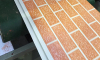
Short answer: embossed panel quality is decided by the roll, not by the machine's paint job. Check four things — pattern depth consistency across the panel width, registration of the repeat, coating integrity at the pattern radii, and panel flatness. Then confirm the roll specification (hardness, engraving method, plating) and ask for output measured at your pattern depth.
Why panel quality is a tooling question
On an embossing machine the pattern is fixed in the engraved roll. The roll presses the pattern into coated sheet, and every quality defect a buyer sees on a delivered panel — shallow areas, a pattern that drifts, coating that cracks at the valleys, a panel that will not sit flat — traces back to the roll, the substrate, or the relationship between them.
This is why two machines with the same tonnage and the same frame can produce visibly different panels. The frame carries the load; the roll makes the product.
What a roll specification should state
A roll specification that can be checked looks like this:
| Item | What to look for |
|---|---|
| Roll construction | Forged body, quenched and tempered, induction hardened — not a machined casting |
| Surface hardness | HRC60 at the pattern surface |
| Roll size | Roll diameter and face width, e.g. 400 × 1200 mm, and how many pieces |
| Pattern engraving | Laser engraved to the supplied artwork, not hand-chased |
| Plating | Chrome plated after engraving, for wear resistance |
| Bearings and housings | Solid steel bearing housings, specified bearing size |
| Drive | Motor rating with variable frequency control, e.g. 15 kW with VFD |
If a supplier cannot state hardness, engraving method and plating for the roll, the price difference between quotes is probably hiding in the roll.
Five checks you can run on a sample panel
1. Depth consistency across the width
Take a depth reading at the left edge, the centre and the right edge of the same pattern element. Depth that falls away towards the edges points to roll deflection, uneven bearing preload or a frame that is not stiff enough for the load.
2. Registration of the repeat
Lay two panels from the same run end to end. The pattern pitch should carry across the joint without a visible step. A drifting pitch is a tooling or feed problem, and it will get worse as the roll wears.
3. Coating integrity at the radii
Look at the valleys and the tight radii, not the flat fields — that is where coating fails first. Cracking, whitening or loss of gloss at the radii means the coating was stretched beyond what it can take, or the roll geometry is too sharp for that coating.
4. Flatness and twist
Put the panel on a flat surface and check for rocking and for twist along the length. Embossing introduces stress into the sheet; a line that does not control it delivers panels that fight the installer.
5. Edge quality
Cut edges should be clean and square. Ragged edges on a decorated panel are unrecoverable, and they usually mean the cutting station is not matched to the line speed.
Substrate and coating decide half the result
The same roll will produce a good panel on one substrate and a poor one on another. Embossing machines are normally specified for prepainted steel sheet, aluminium sheet and galvanized sheet. What matters at specification stage:
- Coating type and thickness — a coating that survives shallow embossing may crack at depth.
- Substrate gauge — thin sheet follows the pattern more easily but distorts more between patterns.
- Protective film — if the visible face is filmed, the film has to survive the roll without marking.
Give the supplier the exact substrate and coating you will run. If a supplier quotes without asking, they are quoting a machine that runs their demo material, not yours.
What "output" should mean in the specification
Nominal line speed is a poor acceptance number because it is usually measured on a shallow pattern. Ask instead for panels per shift at your pattern depth, including coil changes and changeover. Judge the machine on that figure.
Then ask what happens to output as the roll wears. A hardened, chrome plated roll is specified so that wear stays predictable — pattern depth should not quietly drift away over the first year of production.
Acceptance checks to run before the machine ships
- Run your own coil, not the factory's demo coil.
- Run at your deepest pattern, not the easiest one.
- Measure depth across the full panel width and record the numbers.
- Keep three panels from the acceptance run as the reference standard for future deliveries.
- Confirm the roll identification — hardness, engraving and plating — in the handover documents.
The three reference panels matter more than the acceptance report. When a quality dispute appears six months later, a physical panel settles it faster than any document.
Frequently asked questions
How long does an embossed roll last?
Roll life depends on pattern depth, sheet gauge and coating. The roll is specified with an induction hardened HRC60 surface and chrome plating so that wear is slow and predictable rather than sudden — but the honest answer is that a deep pattern in thick, hard substrate wears a roll faster than a shallow pattern in thin sheet.
Can I emboss a different pattern with the same roll?
No. The pattern is fixed in the engraved roll, so a new pattern needs a new roll.
What artwork do you need for a new pattern?
Your pattern as artwork, or a physical sample panel for tooling development. Depth range and panel width are needed at the same time, because the roll geometry follows from them.
Should I buy a spare roll with the machine?
If a single pattern carries most of your volume, yes. A spare roll priced with the machine costs less than an emergency roll bought later, and it removes the production stop while a roll is being re-made.
Next step
Send the pattern, the depth you need, the panel width and the substrate you will actually run. Panels can then be judged against a specification instead of an impression. See the metal embossing machine specification, the carving panel line, or contact us with your requirements.
Related News

Contact US
Product Information
Quantity
Unit
Piece
Support order samples, customization, wholesale direct, and complete payment. If the product you look for does not have corresponding customized content, pls fill out the form below to contact us, and we will reply ASAP.